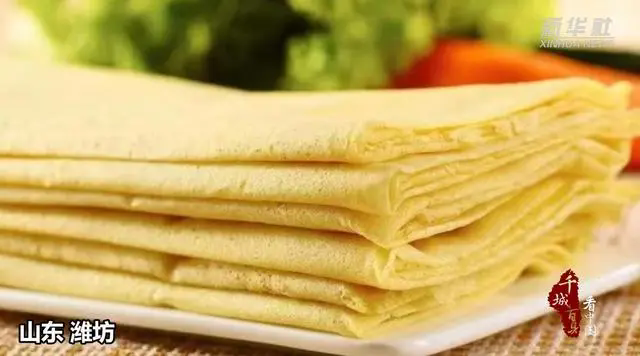
Shandong Pancake
Introduction
Shandong Pancake, a beloved traditional Chinese food, is a savory and versatile staple that hails from Shandong province in China. Known for its thin, chewy texture and flavorful taste, Shandong Pancake is crafted from a simple mixture of grains such as millet, wheat, or corn. This humble pancake is often enjoyed on its own or as a wrapper for various fillings, thus becoming a part of diverse culinary experiences across China. Its presence at temple fairs and local markets signifies its popularity and cultural significance, offering a taste of authentic regional cuisine.
History
The origins of Shandong Pancake can be traced back to ancient times, reflecting the agrarian roots of Shandong province. As a region characterized by its fertile land and abundant grain production, Shandong has long been a hub for innovative grain-based dishes. The pancake originally served as a practical and nutritious meal for farmers and laborers who required sustenance that could easily be carried and consumed in the fields. Over centuries, the pancake evolved from a simple staple to a celebrated dish enjoyed in various culinary contexts. Its historical journey mirrors the evolution of Chinese cuisine, where simplicity and resourcefulness lead to a rich tapestry of flavors and cooking techniques.
Ingredients
The ingredients of Shandong Pancake are straightforward yet essential to achieving its distinctive texture and flavor. The primary component is flour made from grains such as millet, wheat, or corn, each imparting unique qualities to the pancake. Water is added to form a smooth, pliable dough, sometimes accompanied by a small amount of salt to enhance flavor. Some recipes incorporate additional elements like green onions, sesame seeds, or seasonings to add complexity and taste variations. The minimalistic ingredient list underscores the pancake's role as a versatile culinary canvas, allowing for numerous adaptations and accompaniments.
Preparation
Traditional Methods
The preparation of Shandong Pancake traditionally involves a methodical process that emphasizes craftsmanship and patience. The dough is meticulously kneaded until it reaches a smooth consistency, then allowed to rest to develop its elasticity. Once ready, the dough is rolled into thin, even circles. Cooking the pancake requires a flat, heated surface, often a griddle or large pan, where it is cooked over moderate heat. The pancake is cooked on one side until small bubbles form, then flipped to cook the other side, resulting in a delicately browned and slightly chewy texture. This traditional method of preparation reflects the skill and attention to detail characteristic of Shandong culinary practices.
Modern Variations
Modern interpretations of Shandong Pancake have expanded beyond its traditional roots, incorporating diverse ingredients and cooking techniques to cater to evolving palates. Contemporary variations may include the addition of eggs, herbs, or spices to the batter, resulting in enhanced flavors and nutritional profiles. Some chefs experiment with fillings such as stir-fried vegetables, meats, or sauces, transforming the pancake into a complete meal. The adaptability of Shandong Pancake to modern tastes demonstrates its enduring appeal and versatility, bridging the gap between time-honored traditions and contemporary culinary innovations.
Cultural Significance
Shandong Pancake holds significant cultural value, representing both the heritage and the ingenuity of Shandong province. As a dish that has been passed down through generations, it embodies the resilience and creativity of the region's people. The pancake's presence at cultural events and temple fairs underscores its role in community gatherings and celebrations, acting as a symbol of shared identity and tradition. Its simplicity and accessibility make it a cherished food across social and economic boundaries, reflecting the unifying power of food in Chinese culture.
Regional Variations
While Shandong Pancake has its roots in Shandong province, its popularity has led to the emergence of regional variations across China. In different areas, local ingredients and culinary influences shape the pancake's preparation and presentation. For instance, some regions may use rice flour instead of wheat, resulting in a distinct texture and taste. Others might incorporate local spices or herbs, giving the pancake a unique flavor profile. These regional interpretations of Shandong Pancake highlight the diversity and adaptability of Chinese cuisine, where a single dish can assume countless forms while retaining its essential characteristics. Photo Gallery(3 pictures)CategoriesLifestyleTagFood CultureLocal CultureCatalogue1. Introduction2. History3. Ingredients4. Preparation5. Cultural Significance6. Regional Variations- - - []








